Writing a report from nothing, between rooms, is where time disappears and detail slips. A structured draft turns the job into editing, not authoring.
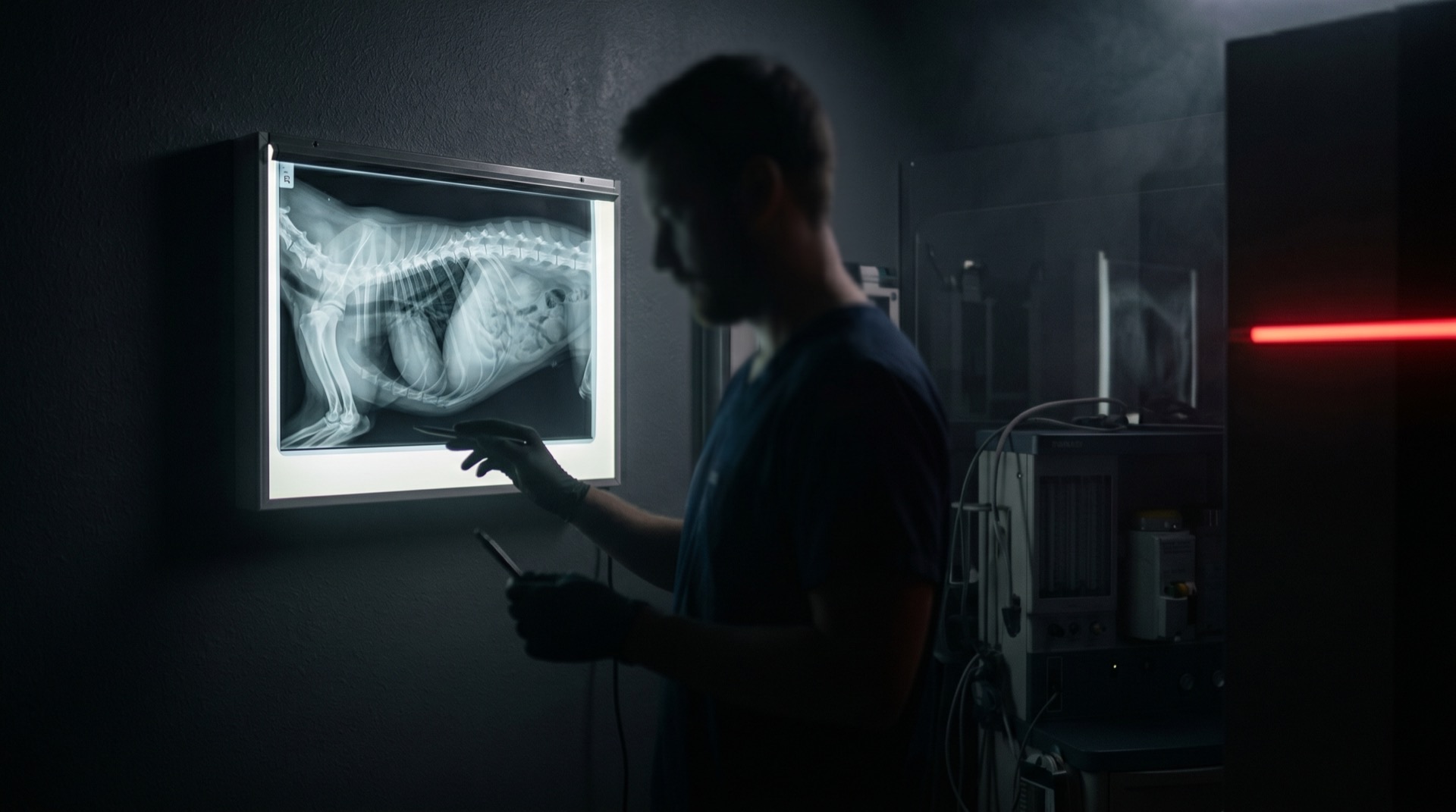
Veterinary radiograph drafting
Every radiograph, a draft report in seconds.
It's 4 p.m., the lobby is full, and there are six studies waiting. Drop a radiograph into VetVision and get a structured draft back — study type, region-by-region findings, a hedged impression, and what to recheck — so your veterinarian starts from a working draft instead of a blank page.
A draft aid · Reviewed & signed by your veterinarian · Not a diagnosis
The squeeze
The films stack up faster than anyone can read them.
A full appointment book, walk-in emergencies, an understaffed back, and a phone that never stops. The radiographs are taken in minutes — but a careful read, written up cleanly, is the part that gets squeezed. VetVision gives that part a head start.
By the end of a double shift, a subtle finding is easy to skim past. A second structured pass surfaces regions and questions worth a deliberate second look.
Owners want answers now, and referral reads can take days. A clean working draft helps your team frame the next step in the room, not next week.
Try it now
Drop a radiograph. Get a working draft.
Upload or drag in a JPG or PNG from any modality — no PACS integration, no install. VetVision returns a structured draft your veterinarian reviews, edits, and signs.
VetVision is a drafting and triage aid, not a diagnosis and not a medical device. A licensed veterinarian reviews and signs every study. Images are analyzed in the moment and not stored.
How it works
Three steps. Under a minute. A draft on the screen.
Drop the radiograph.
Drag in or upload a JPG or PNG from any X-ray system. Add a line of context — species, view, the clinical question — if you have a second. No PACS hookup, no software to install.
VetVision reads it.
It identifies the study, comments on technical quality, works region by region, and writes a conservative, hedged impression — flagging anything uncertain or worth another view rather than guessing past it.
Your veterinarian reviews and signs.
The draft lands structured and editable — not a verdict. Your veterinarian corrects, correlates with the patient, finalizes the read, and signs off. The clinical judgment stays human, start to finish.
What it drafts
A structured read — not a one-line guess.
VetVision returns the same shape a veterinarian would write up, so the draft drops cleanly into the record and is fast to verify line by line.
Study type
Best read of species, body region, and view — and an honest "unclear" when the image doesn't make that obvious, instead of a confident wrong label.
Technical quality
Positioning, exposure, and inspiration noted up front — so a re-shoot is caught before a finding is read into a poorly positioned film.
Findings
Observations tied to the anatomic region they came from — cardiac silhouette, lung fields, ribs, spine, diaphragm — the way a report reads.
Measurements
Quantitative notes — a rough VHS, for example — only when they're confidently visible. Never an invented number to fill a field.
Impression & recommendations
A short, hedged impression of what's notable, plus next steps — additional views, clinical correlation, specialist referral — to brief the conversation in the room.
Flags for review
Uncertainty, poor image quality, and anything urgent surfaced explicitly — the items that most deserve your veterinarian's deliberate second look.
Sample output
A real draft, on a real film.
This is the kind of structured draft VetVision returns from a canine thoracic radiograph — every line a starting point for your veterinarian to confirm, correct, and sign.
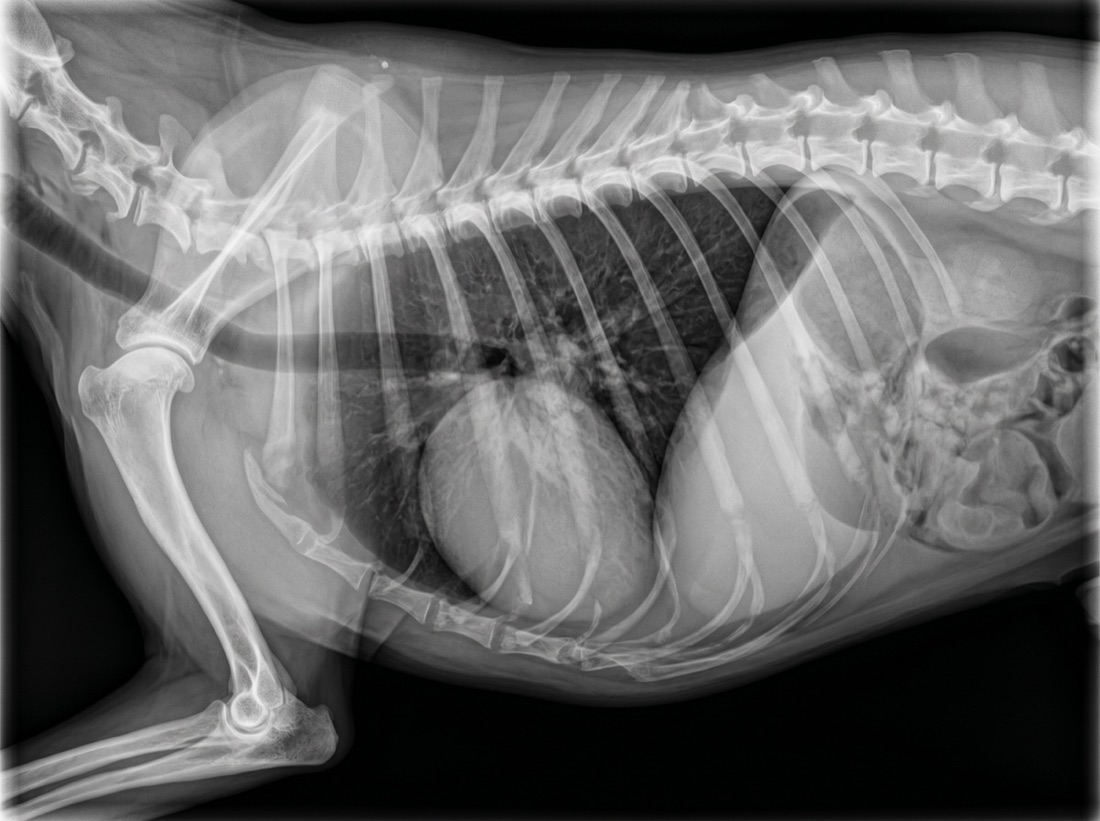
Canine thoracic radiograph, lateral view
draft · for veterinarian reviewTechnical qualityAdequate positioning and exposure; mild expiratory phase may accentuate the cardiac silhouette. Confirm against an inspiratory film if available.
Regions reviewed
Cardiac silhouetteLung fieldsTracheaRibs & spineDiaphragm
Findings
- CardiacCardiac silhouette appears mildly enlarged; correlate with VHS and clinical signs.
- Lung fieldsNo focal consolidation appreciated; generalized interstitial pattern of uncertain significance.
- SkeletalRibs and visible vertebrae without obvious aggressive lesion on this single view.
Impression
Possible mild cardiomegaly with a nonspecific interstitial pattern. Findings are not definitive on a single lateral view and warrant clinical correlation.
Flags for review
- Single view only — orthogonal (VD/DV) view recommended before conclusions.
- Cardiac assessment is approximate — confirm with measured VHS.
Illustrative example of VetVision's output format. Every report is a draft requiring review and sign-off by a licensed veterinarian.
Who it's for
Built for the people reading films on a clock.
General-practice veterinarians
Turn a stack of studies into edited drafts between appointments — and start the owner conversation in the room with a structured read in hand, not a blank chart.
Veterinary technicians
Prep a clean, structured draft for the veterinarian to review — and catch a positioning or exposure issue worth a re-shoot before the patient leaves the table.
Emergency & after-hours teams
At 2 a.m. with no specialist on call, get an organized first pass to triage against — fast enough to inform the next decision while the case is still in front of you.
Mobile & rural practices
No PACS, no in-house radiologist, long referral turnarounds. Drop an image in the field and get a working draft anywhere there's a connection.

Why VetVision
Built by Astra AI — engineered to hedge, not overreach.
VetVision runs on Astra AI's MIND platform. It is tuned to be conservative on purpose: it labels uncertainty, declines to invent measurements, and surfaces what to recheck — because the goal is to save a clinician time, never to replace their judgment. Images you analyze are processed in the moment and are not stored. The read is a draft; the veterinarian is the author of record. Patents pending.
Conservative by design
No image stored
Veterinarian signs off
Built on MIND
Questions
What every clinic asks first.
Is this a diagnosis?
No. VetVision produces a draft report — a structured starting point. It does not diagnose, and it is not a regulated medical device. A licensed veterinarian reviews, corrects, correlates with the patient, and signs every study. The clinical decision is always theirs.
Do I need to integrate it with my PACS or X-ray system?
No integration and no install. Export or screenshot an image as a JPG or PNG from any modality, drop it in, and you get structured output you can paste into the record. It works alongside whatever you already use.
What happens to the images I upload?
Images are analyzed in the moment to produce the draft and are not stored by VetVision. Treat patient and owner information per your own clinic's policies — and avoid including identifying details you don't need in the optional context field.
What if the image quality is poor or it's not even a radiograph?
It's built to say so. Poor positioning, exposure, or inspiration are called out in technical quality, and if the image isn't a radiograph or the species is unclear, it flags that and keeps findings minimal instead of guessing.
Which species and views does it handle?
It's intended for common small-animal and equine radiographs — canine, feline, and equine — across standard views. Adding the species and view in the context line sharpens the draft. Always confirm the read against the patient in front of you.
Will it replace a board-certified radiologist?
No — and it isn't trying to. VetVision is a drafting and triage aid that gives your team a faster start. For definitive interpretation, continue to rely on your veterinarian's judgment and refer to a specialist where the case calls for it.
Start from a draft, not a blank page.
Drop a radiograph and let VetVision do the first pass — so your veterinarian spends the time where it matters: on the read, and on the patient.